
Our Research:

The design of peptides capable of functionally mimicking the binding sites of proteins represents a promising strategy for the exploration and understanding of protein structure and function. In addition to their basic significance, such protein mimetic peptides are also useful tools for a range of biomedical applications, in particular the inhibition of disease-associated protein-protein interactions (Figure 1).
Our Projects:
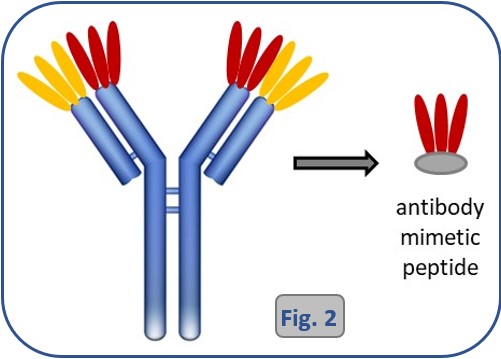
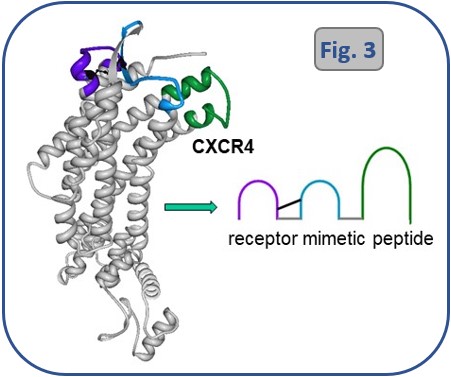
Our research focus is on exploring virus – host protein interactions, with the aim to design inhibitory peptides based on the 3D structure of the protein complexes, as well as using AI based design tools. These peptides, which include binding site mimics of antibodies (Figure 2), receptors (Figure 3) as well as viral proteins (Figure 4), are generated through chemical synthesis, enabling chemical modification aimed at improving inhibitory activity, as well as metabolic stability.
Examples of our research include peptides targeting HIV-1 (Figures 2 and 3), human cytomegalovirus (HCMV) (Figure 4), as well as SARS-CoV-2 (Figure 5). These peptides serve to provide specific insight into the molecular details of the respective protein interactions, as well as to probe pathways towards novel antiviral strategies.


Recently, we have begun to design peptide adapter molecules based on heterodimeric coiled-coils, for the site-selective covalent chemical modification of proteins (Figure 6). This “Bind&Bite” method also enables the generation of orthogonal peptide adapters for simultaneous, mutually selective ligation reactions.

Funding:


